ВСТУПИТЕЛЬНОЕ СЛОВО ГЛАВНОГО РЕДАКТОРА
DEVELOPMENTAL PSYCHOLOGY
The paper examines the connection between the adaptation rate, stressful experiences intensity, and key motivations of first-year students in the Humanitarian Departments of Surgut State University. The research relevance consists in the peculiarities of the first year at university, which is the time when an individual needs to adapt to a novel academic group and requirements. The article considers the features of the specified process, i.e. how quickly a student adjusts to the study group and its activities as well as the intensity of stressful experiences related to identity, voidness, futility, and unfulfillment crises. Moreover, the characteristics list includes the type of academic motivation: internal (gaining knowledge or learning a profession) or external (obtaining a degree). Results reveal that more than 40% of respondents experience difficulties in becoming accustomed to the new life and stage of education. This fact is confirmed by the crises of moderate to high intensity faced by those with not only external but also internal motivations. The indicators allow the authors to suggest an anticipatory adaptation system to make the students adjustment process manageable and subsequently increase their university adaptability while decreasing the intensity of stressful experiences.
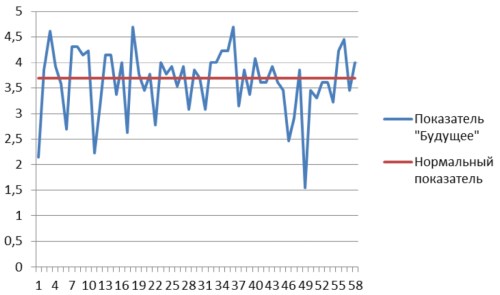
The article presents the results of an empirical study of the components of an individual’s career orientation using a sample of 58 students aged 18–24 from eight natural sciences and engineering majors at Surgut State University. The paper aims to demonstrate the connection between the rationality paradigm and the individual’s time perspective in order to identify career orientation strategies of Surgut State University students. The research relevance is determined by the need to train personnel in priority areas related to the natural and engineering sciences and to adjust the processes of career orientation of those majoring in these fields. The study is based on the following methods: the Zimbardo Time Perspective Inventory (ZTPI) questionnaire adapted to the Russian-language sample by A. Syrtsova; content analysis of the autobiographical essay “My Professional Choice”; open and latent coding; and methods of mathematical statistics. Through correlation analysis, the authors statistically establish a link between the individual rationality paradigm and time perspective indicators. Three career orientation strategies are identified and described, each varying in completeness and success in entering a future specialty. The study’s scientific novelty is attributed to its utilization of an interdisciplinary approach for examining career orientation.
RUSSIAN HISTORY
The article studies the most humble reports on the activities of the Main Directorate for Press Affairs of the Ministry of Internal Affairs from 1908 to 1917. Synthesis, analysis, a historical and systematic approach, and historical reenactment are included in the research methodology. The author highlights that drafted by the Minister of the Interior, the most humble reports to the emperor were common until the liquidation of the Main Directorate for Press Affairs in 1917. The main topics of the specified materials on the press were: the fate of the examined periodicals, assistance to the pro-government press, and permission to stage plays mentioning Russian royal figures.
The paper considers religious discourse at the First Congress of People’s Deputies of the USSR (1989) as a key moment in the desecularization and deprivatization of religion in late Soviet society. Analyzing the deputies’ speeches as well as using the concepts of P. Berger, V. Karpov, and Kh. Kazanova, the author substantiates how the Congress became an institution for religion legitimization in public policy. It is highlighted that religious and secular delegates together established a new role for religion, transitioning from a moral arbiter and focus of social criticism to a participant in state reform initiatives. The research concludes that the Congress not only reflected but also accelerated the qualitative shift in state-church relations, forming the basis for their post-Soviet model, despite persistent contradictions between official statements and local practice.
GENERAL PEDAGOGY, HISTORY OF PEDAGOGY AND EDUCATION
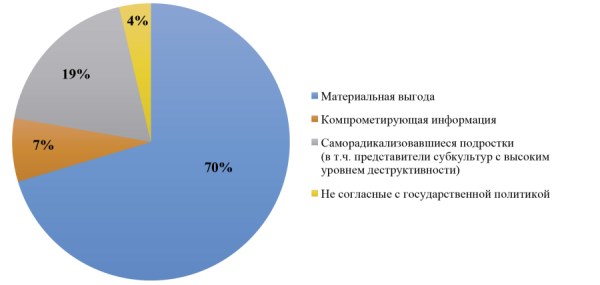
The article demonstrates the findings of a research on the mechanisms for involving adolescents in terrorist organizations and extremist groups. To collect the study data, the author conducted an expert survey among law enforcement officials as well as analyzed extremist and terrorist criminal cases against minors. Using the aforementioned methodology, the paper describes key tendencies in involving Russian adolescents in the radical movements under consideration and consequently presents its standard algorithm. The research novelty lies in a comprehensive investigation of extremism manifestations in Russia, given the current social and political situation. Clearly defined expert opinions on the matter allow examining the actual condition of the extremism prevention system in educational institutions, while the empirical data obtained contribute to the development of effective preventive measures against extremism and terrorism.

The article analyzes the main pedagogical terms, i.e. “education,” “teaching,” “upbringing,” and “development,” from a hermeneutical and semantic perspective. The focus is on clarifying their essence, differences, and relationships as models of a pedagogical process. The study’s relevance stems from the absence of an established hierarchy or correlation system for these categories in science, despite considerable research by both Russian and international scholars. The paper synthesizes a hermeneutical approach to understanding the historically developed definitions of the terms with a semantic examination of their contextual meanings in pedagogical materials. This integrated analysis allows tracing the changes in meanings, identifying stable key definitions, and building a hierarchy of interdependence between the concepts. The designed conceptual map illustrates the hierarchy and interrelation of pedagogical terms, demonstrating their complementarity and importance for a coherent pedagogical process. In addition, the results show that the polysemy and synonymy of the terms reflect the pedagogical phenomena’s complexity, rather than terminological shortcomings. The findings hold theoretical and practical significance for teachers, methodologists, and developers of educational standards, contributing to a deeper understanding of the integrity of the pedagogical process and the design of effective educational models.
PHYSICAL EDUCATION AND PROFESSIONAL PHYSICAL TRAINING
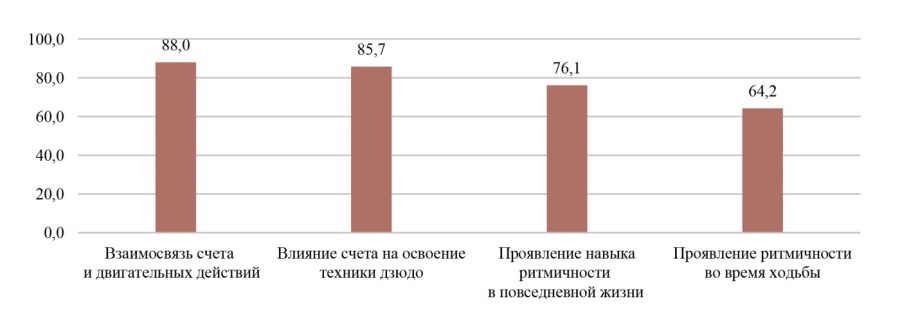
The paper aims to assess the extent to which judo, integrated into elective physical education and sports courses, contributes to the development of tempo and rhythmic abilities in students not majoring in sports. The study is carried out at the Physical Education Department of Surgut State University and involves second-year undergraduate and specialist-program students from non-sports fields of study. To assess the level of development of tempo and rhythmic abilities, the tests created by V. L. Botyaev, including “reproduction of a prescribed jumping rhythm” and “minimal increase in jumping tempo relative to a set standard,” are used. Additionally, the trainees completed a survey about transferring skills and abilities learned in judo to their everyday lives. The research demonstrates that students practicing judo within elective physical education and sports courses exhibit superior performance in tests of tempo reproduction and maintenance compared to the students practicing volleyball, i.e. the control group. The study’s scientific novelty lies in confirming the transfer of tempo and rhythmic abilities developed during judo training into the students’ everyday lives.
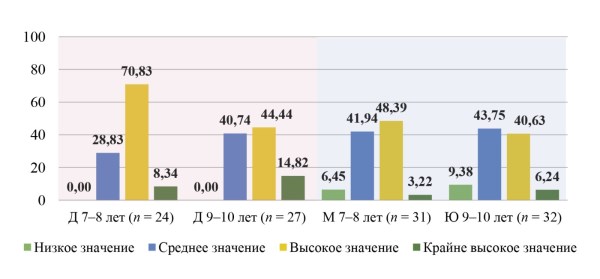
The study assesses the psycho-emotional state and attitudes toward a healthy lifestyle among Khanty schoolchildren living in boarding schools attached to general education schools during the school year. The goal of the study is to create a health-promoting environment for Khanty children in boarding schools by creating specialized locations for on-site exercise. A comprehensive psychodiagnostic assessment is conducted among 228 Khanty schoolchildren aged 7 to 17, who reside during the school year in boarding schools affiliated with comprehensive schools in the Surgutsky District. The following methods are used: “Happy-Sad” (N. M. Ilyina), “What Prevents Me from Leading a Healthy Lifestyle?” (V. D. Purin), and M. Lüscher color test adapted by L. N. Sobchik. The students are tested using the NS-Psychotest.NET hardware and software system. The study results demonstrate a high level of overall anxiety related to school learning, particularly pronounced among primary school-aged girls (approximately 79%). Increased stress indicators are also recorded among adolescents aged 13–17. A significant correlation has been identified between children’s self-reported low barriers to a healthy lifestyle and elevated stress indicators. The authors’ approach consists in an on-site exercise technique modified for educational environments, which integrates physical activity into established routines, thereby eliminating the need to allocate time for it. It is expected that the developed model of a health-promoting space for Khanty schoolchildren, through the creation of locations for on-site exercise, will help reduce psycho-emotional stress and increase physical activity.
METHODOLOGY AND TECHNOLOGY OF PROFESSIONAL EDUCATION

The article systemizes the lifestyle of a pedagogical university using a polyparadigmatic approach in education. The paper analyzes the educational activities of the aforementioned institutions and reveals their patterns and differences. Moreover, the author’s method allows identifying the lifestyle of a pedagogical university and its diverse manifestations within faculties. In conclusion, the work offers recommendations for developing a humanitarian type of the lifestyle in a pedagogical university.
The purpose of the article is to define the term “professional engineering culture” and clarify its components. To achieve this goal and consider the phenomenon from a cultural perspective, the authors apply a general cultural approach as well as specific structural and functional methods. The methodology determines the study’s novelty, as the researchers have examined the concept of professional engineering culture solely in relation to human personality, not culture. The results of the investigation are the developed definition of professional engineering culture and its revealed components, which include subjective and objective elements.