Type of publication: scientific journal
Publication Frequency: quarterly
Year of establishment: 2000
Main content of the journal: original scientific articles
Founder and publisher: Surgut State University
Chief Editor: Sergey M. Kosenok
The online journal is registered with the Federal Service for Supervision of Communications, Information Technology, and Mass Media (EL No. FS 77 - 85691 of August 3, 2023).
ISSN: 2949-3463 (online)
The journal is included in the List of peer-reviewed scientific editions of the Higher Attestation Commission, in which the main results of theses for the degree of Candidate and Doctor of Sciences are published in the following specialties:
5.3.7. Developmental Psychology
5.6.1. Russian History
5.8.1. General Pedagogy, History of Pedagogy and Education
5.8.4. Physical Education and Professional Physical Training
5.8.7. Methodology and Technology of Professional Education
Category in the Higher Attestation Commission List: 2
Languages: Russian, English
Reviewing: The Editorial of the Journal carries out scientific reviewing of all incoming materials for the purpose of expert evaluation. The type of reviewing is double-blind. All reviewers of the Journal are recognized experts on the subject of the reviewed materials.
Authors of the Journal: the Journal publishes articles by local and foreign authors.
Territory of distribution: Russian Federation, foreign countries.
Full texts of articles are provided in open access on the website https://www.sev-reg.ru, in the Electronic Library of Surgut State University, the Russian State Library, on the website of the Scientific Electronic Library “CyberLeninka”, eLIBRARY.RU, Google Scholar, CNKI Scholar. The Russian Science Citation Index (RSCI) includes information about published materials.
The journal is registered in the Crossref system (each article is assigned an individual Digital Object Identifier – DOI). DOI prefix: 10.35266.
The editorial board does not charge the authors for preparation, placement and publishing of materials.
Analysis of publication activity of the journal: https://elibrary.ru/title_profile.asp?id=9381
Contact Information:
Editorial office address: 628412, Khanty-Mansi Autonomous Okrug – Yugra, Surgut, Lenina pr. 1.
Email: science.journals@surgu.ru
Telephone: +7 (3462) 76-29-88
Website: https://www.sev-reg.ru
Current issue
EDITORIAL
DEVELOPMENTAL PSYCHOLOGY
The paper addresses the issues of self-actualization in female medical students at Surgut State University. The authors’ definition of the aforementioned term centers on the pursuit of personal fulfillment and the activation of the young generation’s inherent abilities. This topic is especially relevant given the characteristics of the modern education process, such as rapid changes, the large amount of information, and high competition. The research is conducted at Surgut State University using cognitive analytic therapy. It includes 161 female medical students from Surgut State University aged 18‒22. The analyzed individuals exhibit a notable degree of self-actualization. This leads to enhanced psychological and emotional well-being, contributing to greater overall life satisfaction and the development of a more balanced and productive society. However, behavioral flexibility and cognitive ability are characterized by low scores and require close attention during the organization of the educational process. The self-actualization assessment techniques are applicable in the identification of female university students’ capabilities for designing personalized development programs and a creative educational system. This system’s focus would encompass academic accomplishments and the individual development of each participant in the educational process.
Teenage aggressive behavior is considered a significant marker of emotional and social maladjustment. Particularly, it affects teenagers with vision disorders facing sensory deprivation, which increases frustration and decreases the possibilities for meaningful engagement with the environment. Based on the synthesis of Russian and international studies, the authors determine the main aggressive reaction triggers. These are limited sensory experiences, chronic frustration, self-control deficits, communication difficulties, and peculiarities in social interaction. Moreover, the article specifies the aggressive behavior characteristics in teenagers with congenital and acquired blindness while also highlighting the gender differences in aggression manifestations. Special attention is paid to internal (personal, emotional) and external (domestic, social) aggression predictors.
RUSSIAN HISTORY
The paper is devoted to the analysis of the departmentalism phenomenon in the Soviet economy presented in the academic discourse of the mid-1960s. The study focuses on contradictions between the sector ministries re-instituted after the 1965 economic reform and the regional party and economic elites protecting their parochial interests. The work describes Soviet departmentalism as a form of economic particularism practiced by the key economic subjects. The author determines the institutional and practical aspects of departmentalism via case study and discourse analysis. The examination focuses on shorthand notes of the Supreme Soviet of the USSR (October, 1965) and the 23rd Congress of the Communist Party of the Soviet Union (March‒April, 1966). It also includes publications in the Pravda and Izvestia newspapers, and archival records originally introduced into scholarly discourse. Despite the official narrative about combating departmentalism promoted by the leading political figures, i.e. Leonid I. Brezhnev and Nikolai V. Podgorny, the specified phenomenon maintained its status as a systemic problem. The work shows its major manifestations, which are ministries’ incoordination and functional overlapping as well as interdepartmental conflicts. These problems were typical for both the north of the Tyumen region and whole USSR economy. Utilizing the concept of particularism and drawing upon contemporary case examples that highlight the phenomenon's prevalence, the article provides a clear explanation of departmentalism. It is concluded that the initiatives undertaken by party organizations and national control bodies, who were designated as the principal adversaries of departmentalism, were insufficient. Parochial interests became an integral part of the late USSR economy, while their signs in such areas as civil defense posed risks to national security.
The Nazi Germany invasion of the Soviet Union significantly fostered patriotism among Soviet residents. While soldiers and officers fought for their motherland, the population in the rear provided them with considerable assistance. During the Great Patriotic War, Soviet citizens could express their patriotism by gathering holiday and anniversary gifts for the Red Army. This article considers the movement using some Oblasts of the Middle Volga Region as case studies. Through the synthesis of diverse newspaper sources, archival materials, and period-specific scientific studies, the author deduces that the movement in question was of great importance, especially in terms of its emotional and psychological resonance. In addition, it strengthened the connection between the frontline and the rear, increased determination in Soviet soldiers on the front line, and boosted the confidence in victory among the civilian population in the rear regions.
GENERAL PEDAGOGY, HISTORY OF PEDAGOGY AND EDUCATION
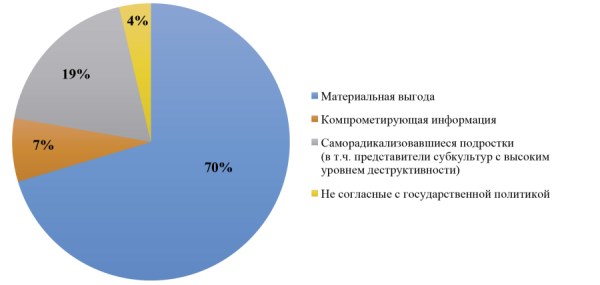
The study investigates how parents support the project and research activities of gifted children. Parents’ aid to primary school students in science pursuit serves as the research subject. The work considers the concept of parental support, particularly support for talented children, and shows the significance of designing and exploratory performance in the prodigies’ growth. The article aims to interpret the results of the survey on parental aid in the project and research activities of young talents. The study objectives include analyzing publications on the relevant aspects of parental support for gifted students’ development. Furthermore, the scope of these tasks includes an empirical investigation into parental approval of scientific pursuits for gifted children, alongside an assessment of the collected data. The research applies the activity and axiological approaches while also utilizes the following methods: quantitative and qualitative analysis, data interpretation, and survey on parental aid to talented students in the project and research work. The questionnaire respondents are the parents of the students aged 7–10, i.e. winners of research and project contest for primary school children. The authors demonstrate the results of the survey as well as assess the answers to each question. The research novelty lies in developing the parental support concept within the psychological and pedagogical framework and investigating parents’ opinions on the importance of the specified matter. Results show that parents acknowledge the impact of their aid on gifted pupils’ scientific performance. Nevertheless, the correlation between the autonomy of child prodigies and parental support manifestations requires further investigation.
PHYSICAL EDUCATION AND PROFESSIONAL PHYSICAL TRAINING
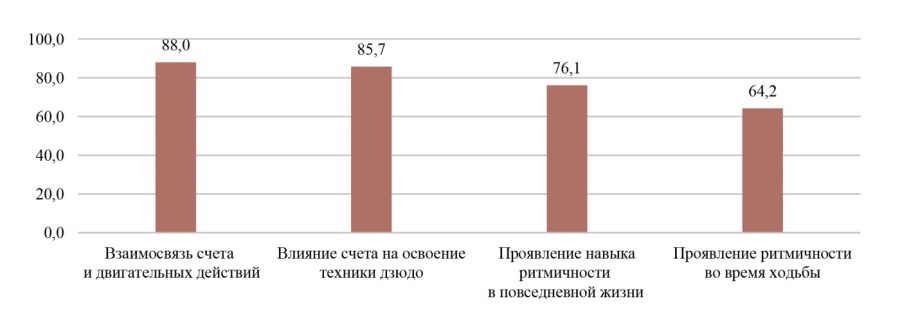
The paper substantiates the author's perspective on the convergent subjectivity concept within the theoretical and methodological framework. Thus, the concept is in building the physical and social competence of a person. This research focuses on the development of an integrated character trait that simultaneously enhances students' motor autonomy and socialization within physical education (PE). The article's purpose lies in formulating a concept clarifying the transition pattern from an individual physical action to a comprehensive social interaction, which implies motivated incorporation of cognitive, motor, as well as social and communicative development components. The methodology comprises the convergent approach, the theory of subjectivity, and activity physiology. The author's approach consists in justifying the necessity of merging the listed elements into a unified teaching process that aims to foster convergent subjectivity in students. The definition pertains to the student's competence in executing actions autonomously and in contributing to shared activities. Determined in previous works by the author, convergent subjectivity is a mechanism for developing a person's physical and social competence. In addition, the paper reveals the role of motor cognition in subject-genesis. The scientific novelty involves outlining the phases and principles of a student's subjective transition from individual action to social interaction. The latter are motor decentration, motor plan coordination, value-based reflection. The author introduces the "social and motor task" term as a didactic part of convergent physical education contributing to motivated activation of the physical and social competence components. The conclusion addresses the prospects for individual and typological differentiation of students, predicated on the characteristics of motor cognition and the degree of personal physical culture development. Researchers can apply the article's materials in designing innovative methods for middle-school PE teaching.
The article discusses exercise snacking and presents a survey conducted among 538 students of Heihe University, China. The author analyzes the current rate and determinants of youth involvement in the specified physical activities. The research shows that a sedentary lifestyle is typical of students, while also highlighting that this population group prevalently devotes their leisure time to phone use. Lack of sports grounds and adverse weather conditions are the main limiters of physical exercise for students. Still, a sedentary lifestyle can cause lower back and neck pain, the academic motivation reduction, and other related issues. The young generation considers exercise snacking (i.e. flexibility exercises and jumping rope) during breaks highly effective. Moreover, students acknowledge that short-term intense exercises can improve physical and mental health as well as enhance learning capabilities. Results confirm that exercise snacking is the kind of physical activity adapted to the peculiarities of students' lifestyle.
METHODOLOGY AND TECHNOLOGY OF PROFESSIONAL EDUCATION
The article presents theoretical research on the process of professional position development in cadets studying at educational organizations of the Ministry of Internal Affairs of the Russian Federation. This study is founded upon the examination of contemporary pedagogical support practices, viewed as a valuable method for enhancing professional training within departmental educational institutions. The authors distinguish and examine the features and structural components of pedagogical support. Moreover, the work describes cadets’ professional position fostering within departmental education, including its essence and peculiarities. Results reveal the complexity and diversity of the specified practice. The aforementioned process is the key element shaping the novice personnel’s professional position as well as general readiness for modern challenges and trends dictated by society and government.
The paper addresses the issue of educational resource selection in humanities teaching. The relevance of the research lies in the rapid integration of digital means into education. In many cases, resource selection is based only on technological capabilities and performance standards, excluding teaching. Consequently, the article aims to develop and validate a set of criteria for choosing digital educational resources in humanities teaching. The methodology includes the activity approach, which defines a digital resource as a means of organizing the teaching process. The authors analyze current studies in digital didactics, digital content design, assessment of educational resource quality, and digital competence development in teachers. While the existing selection methods focus on either the digital mean features or its implementation conditions, the study confirms the necessity of clarifying the selection procedure itself. Hence, the article suggests a criteria system that applies the structure and main constituents of teaching. The latter comprises goal setting, informativeness, educational activities, communication, and the potential for reflection. The correlation between the listed components and digital resource functionality is presented as a matrix. In the specified selection, the digital mean feasibility needs to be consistent with the learning objective as well as student's analytical, interpretive, and discussion-based activities. The proposed approach allows researchers to regard the digital resource selection as part of teaching planning. In addition, it can serve as a ground for creating a diagnostic kit to assess the educational expediency of the selected means.
The article examines art-technologies as a component of pedagogical provision for developing the skills of foreign language professional communication in future doctors. The paper defines the term "art-technologies developing foreign language professional communication skills in future doctors" as pedagogical forms, methods, and impact techniques incorporating a foreign language and art elements. It is aimed to create a comfortable educational environment, boost motivation, and promote the mastering a foreign language for professional communication among future medical specialists. The study methodology comprises consideration and analysis of prominent research perspectives, generalization and systematization of scientific and educational experience. Applying the techniques, the author designs and implements the following class activities based on art-technologies in the future general practitioners and pediatricians training: 1) "Medicine in Art Deco"; 2) Deontological notebook "Snake and Chalice"; 3) Theatrical recipe. The document features lesson plans, the efficacy of which has been assessed at Surgut State University. The research novelty consists in optimizing the solution of the training tasks within the aforementioned area, which are outlined in the Federal State Educational Standard for Higher Education, i.e. General Medicine and Pediatrics specialties. The improvement is achieved through the synthesis and combination of teaching methods and art elements, using art-technologies as the process core. Its purpose is to initiate a discourse on artistic, graphic, as well as theatrical facts, phenomena, events, and situations. The presented lesson plans hold practical significance for tutors who specialize in developing future doctors' foreign language skills for addressing professional communication and interaction problems.