EDITORIAL
DEVELOPMENTAL PSYCHOLOGY
The increasing number of international students in Russian universities, particularly within the framework of China’s Belt and Road Initiative, emphasizes the importance of their social, cultural, and academic adaptation. Emotional well-being is a crucial factor, as it directly relates to academic success, life satisfaction, and resilience. This study aims to assess the effectiveness of group psychological support in improving the emotional state and adaptation capacity of Chinese students in the early days of stay in Russia. The study includes 136 students aged from 17 to 25. Research tools comprise the Chinese College Student Adjustment Scale (CCSAS), Visual Analogue Scales (VAS), the Well-Being–Activity–Mood Scale (SAN), the Satisfaction With Life Scale (SWLS) by Dr. E. Diener, and an author’s version of the polar profiles technique. According to CCSAS, about 30% showed a low level of adaptation, mainly in the academic and interpersonal domains. VAS served to evaluate the effectiveness of the group psychological support. Significant improvements were observed in the subset of participants (19 students): their emotional state increased from 6.5 ± 1.1 to 7.6 ± 1.5; t (18) = 5.42; p < 0.001, while subjective adaptation rose from 5.8 ± 0.9 to 6.4 ± 1.1; t (18) = 4.71; p < 0.001. Correlation analysis showed strong associations between life satisfaction, well-being, activity, and mood on the one hand, and negative indicators such as anxiety, stress, and adaptation difficulties on the other. The findings confirm that group psychological support reduces stress and anxiety, strengthens the sense of belonging, and develops effective self-regulation strategies, thus serving as an efficient tool for the adaptation of Chinese students in Russian universities.
The paper presents findings of the research aimed at determining the connection between stress perception level and psychological well-being of the medical students in Khanty-Mansi Autonomous Okrug – Yugra. The authors distinguish three groups with different stress perception levels, which demonstrate the variants of a person’s adaptation to life challenges. The major characteristics of the students with low stress perception (G1) are high self-acceptance and consideration of competition as a key well-being source. Nevertheless, motivated by competition, this group relatively decreases significance of personal growth and positive human relations. Here, lack of autonomy may increase stress vulnerability. The medium stress perception group (G2) shows generalized reaction to difficulties using professional competence as the main wellbeing source. These students’ well-being comes from within and, in this case, the autonomy reduction serves as a coping mechanism. The students with a high stress perception level (G3) are the most stress-susceptible individuals, as competence and life satisfaction can play the role of maladaptive factors due to possible perfectionism. This group views autonomy as a crucial well-being determinant. The research indicates the inverse dependence of a general well-being level on the stress perception intensity. Stress perception is the backbone defining the specific well-being architectonics, i.e. which of its components (autonomy, competence, relations) function as the leading coping mechanisms or stress vulnerability factors. The authors underline the importance of validating the differential psychological support for each of the aforementioned groups with the focus on stress resistance development and personal potential fulfillment in the professional formation process.
RUSSIAN HISTORY
Aremzyanskoe Selo (henceforward “the Village”) of Aremzyanskaya (Abalakskaya) Volost, Tobolsk Governorate, is a memory site of the Russian scientist Dmitry Ivanovich Mendeleev. Here, he spent his childhood years. The study is based on the first scientific papers identified in the Tobolsk Ecclesiastical Consistory (F. I156) of the State Archive in Tobolsk. Using the specified materials, the paper examines features of interactions between the owners and the Orthodox churches’ clergy of a possessional manufactory in the Village, Tobolsk Governorate, in 1767–1849. The research methodology involves such general scientific principles as historicism, objectivity, causality, and systematization. To analyze the publications and archival records, the authors apply the following historical research methods: description, historical comparison, retrospective terminology consideration, and others.
The resources analysis defines the functional features of a parish church in the manufactory village. The possessional manufactory owner was responsible for not only constructing the production buildings, acquiring the equipment and labor but also providing the workers with accommodation and all necessities. Therefore, the erection and keeping of churches, bread-reserving shops, schools, and hospitals were the duty of the manufactory owners. Compared to the cases where churches were the peasants’ or Village meeting’s initiatives, the manufactory owners themselves managed the parish clergy and church building maintenance. Therefore, the owner officially agreed to support the priests with bread and monetary prestimony, the amount of which depended on many factors. In the 19th century, due to new church construction, the monetary prestimony was paid by the parishioners. The State didn’t maintain churches in villages with possessional manufactories and plants. The head of the manufactory Maria Dmitrievna Mendeleeva actively participated in the parish’s life. She founded a school for the manufactory workers’ children. In addition, when the children of the priest, workers, and state peasants of the Aremzyansky parish were christened, the Mendeleev family members became their godparents. The possessional manufactory demolition and social status change of the possessional workers are the processes that lasted for decades. The issues for further research include the priests’ spiritual and educational activities as well as church functioning during the transition period (1850–1860s) and onwards. The results have scientific and practical significance.
The research improves and broadens existing knowledge on the history of natural resource management in Yugra, focusing on the local practices of the Kondinsky Krai. The period from the late 19th to the first third of the 20th centuries was a time of great change in the life of society that witnessed the Russian-Soviet transition in the 1920s. The shift also affected the Konda area. The aim of the article is to analyze local practices of natural resources utilization using the Kondinsky Krai in the late 19th and the first third of the 20th centuries as a case study. The work demonstrates the interaction, specifically the clash, of different environmental management patterns in this territory. Moreover, the author examines the Konda population’s relations, encompassing harmonious coexistence and conflict, with new, progressive forms of interaction with the external environment and traditional, local, pre-industrial ones. The methodology includes the source study heuristics and analysis. The paper considers the following written materials: records of government, economic, and public bodies, statistics, periodicals, as well as researchers’ publications on regional studies in the 19th and early 20th centuries. In the 1920s and 1930s, Soviet natural management practices failed to become the main resource use pattern for the Konda area, environmental management of which was based on biological resources and the idea of northern indigenous peoples as primary creators of material goods. The new government needed a man who would transform nature, conquer it. Modern approaches to natural resources use in the North of Russia must incorporate the entire Soviet experience of regional development. Ecology should determine the ideology of Northern territory development, and not vice versa.
GENERAL PEDAGOGY, HISTORY OF PEDAGOGY AND EDUCATION

The article proposes a structural and conceptual model of developing young teachers’ transferable skills via team mentoring. At the theoretical and methodological level, the author substantiates the competency-based and person-centered approaches, which serve as the model design basis. The research considers the model developing mechanism within the following frameworks: theoretical and methodological, targeted, criterion-oriented and diagnostic, conceptual and technological, reflective and evaluative. The paper presents criteria and indicators for assessing the level of young teachers’ transferable skills formation as well as forms and techniques for organizing mentoring practice, which focus on the novice teachers’ professional growth. The study novelty lies in the developed and theoretically underpinned structural and conceptual model, including the highlighted criteria for evaluating its effectiveness. The researchers can apply this practice-oriented pattern in the tutoring system of educational institutions.
PHYSICAL EDUCATION AND PROFESSIONAL PHYSICAL TRAINING
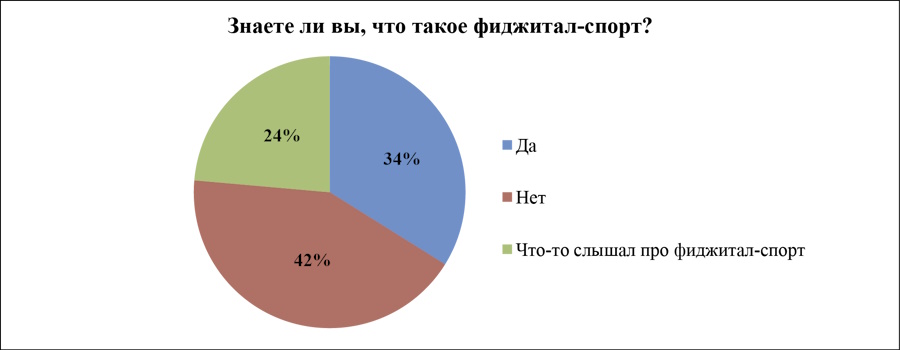
The article presents the results of a survey on awareness and motivational attitudes among students of the Basketball Department towards phygital sports and its development. Researchers conducted the questionnaire survey at the Physical Education and Sports Faculty of Tomsk State University. The research reveals that phygital sports provide new opportunities in physical activities and social interactions for student youth. The combination of physical activity with digital technologies in phygital sports proposes innovative approach to health maintenance and promotion of a healthy lifestyle among the young generation of university students.
The article primarily analyzes modern Chinese and Russian scientific publications in order to examine the universities’ experience in introduction of wushu classes into the Physical Education. The paper evaluates the impact of the specified sport on students’ physical and mental health. The author considers relevant materials published in the Chinese database CNKI and the works of Russian researchers from eLIBRARY.RU electronic library, focusing on empirical data from pedagogical studies and surveys. Based on the collected information, it is possible to conclude that wushu has a positive influence on the students’ health and motivates them to lead a healthy lifestyle.
METHODOLOGY AND TECHNOLOGY OF PROFESSIONAL EDUCATION
The paper considers the essence of interactive learning presented in the works of Russian and foreign scientists. The study focuses on describing the basis of interactive learning at a modern university, i.e. its didactic principles.
The article aims to conduct a theoretical and methodological analysis of interactive learning essence, determine its didactic principles, and substantiate the system of conceptual approaches to its efficient implementation at universities. The latter covers specific conditions of professional students training at a university’s military training center.
The authors utilize the systematic approach, which enables consideration of interactive learning as a complex phenomenon with its own structure, functions, and connections with the external environment. The research applies the following methods: theoretical analysis (comparative, retrospective, conceptual) of philosophical, psychological, and pedagogical literature, as well as systematization. The methodology also includes classification to structure the methods and approaches of interactive learning and modeling to demonstrate the didactic principles system of the subject under consideration. Based on the theoretical analysis of the relevant literature, the study specifies the term “interactive learning”. Thus, interactive learning is defined as a didactic form for organizing the education process characterized by direct interpersonal interaction of every participant (tutors with students and students with one another). Its purpose involves the joint knowledge acquirement and development of critical thinking and soft skills in simulated or real working settings. The conducted theoretical and methodological examination classifies the methods of interactive learning
and conceptual approaches to its implementation in the system of professional students training at the university’s military training center. The scientific novelty lies in systematizing the didactic grounds of interactiv learning used for the professional training tasks and their adaptation to military training. The work reveals the fundamental principles and methods, transformation of tutors’ roles and pedagogical approaches at the military training center. In conclusion, the authors highlight the advantages of interactive learning and show the key features that distinguish it from the active learning.
The article reveals the essence and structure of the “project competencies in the professional training of future teachers” concept. The concept’s significance in the renewal of higher teacher education results standards is justified. Based on an analysis of Russian and international approaches to competence (including the distinction between “competence” and “competency”), the place of project-based competence within the framework of universal and professional competencies reflected in regulatory documents in higher education is clarified. The author devotes special attention to project-based activities as an educational mechanism that ensures the development of meta-skills (self-organization, critical thinking, communication, teamwork, reflection) and the development of future teachers’ readiness to design educational solutions in conditions of volatility and uncertainty. The findings highlight the crucial role of project-based competencies in teacher professional development, emphasizing the synthesis of general and specialized skills for effectively addressing intricate educational challenges within a dynamic professional setting.
Education digitalization determines the approaches to organization of students’ independent study. The paper considers artificial intelligence (AI) technologies as the driver of self-education development in foreign languages learning. The authors analyze the following main areas of AI implementation: individual educational trajectories personification, AI-generated feedback, gamification, and virtual reality use in immersive language practice. Special attention is paid to improving the learner’s autonomy and metacognitive skills, as well as boosting students’ self-motivation. The scientific novelty is the systematization and description of artificial intelligence technologies, which enable self-education promotion in language learning. The practical significance lies in the listed artificial intelligence technologies, which can be applied by tutors in the teaching
process and students in independent study.